
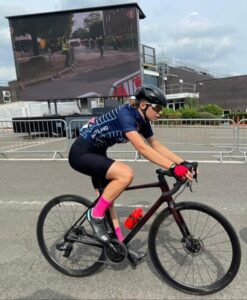
A keen cyclist from the age of three, 14-year-old Arabella Blackburn (S4) would often go mountain biking with her family, in the forest near her house after school or on weekends. Although she finds it hard to remember a time when she wasn’t in the saddle, it wasn’t until Arabella joined the school’s triathlon club, aged 10, that she realised she wanted to take her love of cycling even further.
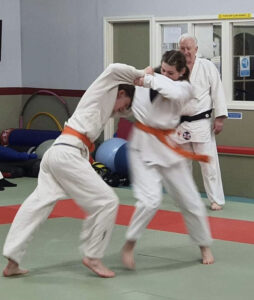
Today, Arabella – who won in the U16 age group at both the Scottish Criterium and Scottish Cyclocross Championships earlier this year – is one of more than 10 percent of Senior School pupils at Lathallan competing in sport at a regional or national level. It is a tally that also includes her two S4 classmates – swimmer, Dean Fearn, who first learned to swim as a youngster at Lathallan Nursery, and is now a British and Scottish record holder; and judoka, Ailsa Arbuthnott, the British Judo Council’s current British Champion.
That this high-performing trio are all part of our Lathallan community doesn’t come as a big surprise. After all, physical education (PE) has always played an important role in our pupils’ lives, since the school was first formed in 1930. And, whether in individual pursuits like cycling and swimming, or team sports like netball and rugby, we have a wealth of sporting brilliance; not just in S4, but spanning our entire school community.
So much so that, after joining us for our annual Sports Dinner in 2018, Zoey Clark – a World, European and Commonwealth medallist – commented: “The number of Lathallan pupils performing at a high level in sport and representing their country is mind-boggling, so the school is clearly doing something right.”
At this year’s Sports Dinner, which takes place on December 9, Dean, Ailsa and Arabella are among six nominated individuals vying to become Lathallan Sports Personality of the Year (SPOTY) – with Harry Cook (S1, Biathlon); Adam Woodhouse (S3, Javelin) and Ben Cranston (S6, Mixed Martial Arts) also in the running for this coveted title.

Inspirational guest speaker, Ross Campbell, the CEO of Oriom – Scotland’s National Sports Performance Centre – and Assistant Manager of Montrose Football Club, will join us at the event, during which red caps will be awarded to those gaining National honours. We will also announce the winners of our Team of the Year award.
Richard Toley, Headmaster at Lathallan School, said: “Whether on or off the field, there is no secret to success – it is simply a case of hard work and dedication. And that is something we see from all our pupils, including those we will be celebrating at our Sports Dinner later this week.
“The effort these individuals put in to excel in their chosen sport is commendable, as is the support of our excellent teaching staff, who work tirelessly to help bring pupils on across a wide variety of sports, through tailored strength and conditioning training, or in ensuring their ability to succeed academically around their extra-curricular sporting commitments.”
Ahead of the Sports Dinner, we spent some time with Dean, Arabella and Ailsa to learn how they got into their chosen sport, what keeps them motivated, and how they balance their pursuit of a winning performance, in- and outside the classroom.
———————————
Arabella Blackburn (S4), Cycling (and Netball and Running to keep up my fitness)
Q: What motivated you to get into your chosen sport?
A:I have always cycled with my family from a very young age, going for mountain bike rides in our local forest. In J4, I joined the school’s triathlon club and realised that I really enjoyed the cycling part of the sport. Mr Carter, my J4 teacher, recommended a local cycling club to me, Deeside Thistle Cycling Club, who I still ride with now. At first, I was a bit reluctant to join but when I did there was no regret as they have really made me feel a part of the wider cycling community and I instantly grew to love the sport.
I really enjoy being good at something and have found that in cycling. I enjoy the feeling of always improving myself; I love riding my bike – the feeling, the places you can go on it, just about everything; and I enjoy meeting new people from all over the country and internationally, and making new friends wherever I go.
Q: Can you tell us about some of your biggest successes?
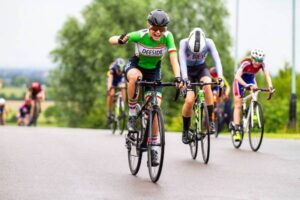
A: My main successes this year have been winning the Scottish Criterium Championships in September and the Scottish Cyclocross Championships in November this year in the U16 age category. I will be wearing the Scottish Championships jersey with pride for the rest of the season and in the road season next year, because I have another year to go in this age category.
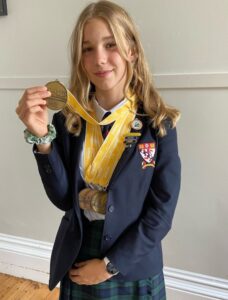
I also represented Scotland in the School Games at Loughborough University. The team consisted of four male and four female riders, and we were competing against the top riders from other regions across the UK. Team Scotland won the event, and I had individual success too, winning a gold medal in the Street Sprints and the Madison.
My best result was in the British National Road Series at Oulton Park. This race was a big success – not just in the placing I achieved, but also in terms of how I raced. I got in a solo breakaway for quite a large amount of the race opener, gaining a 30-second lead. In the end, it was brought back, but it showed me that I was stronger than I thought I was, and I came away with a 3rd place in the bunch sprint which was a nice way to finish off such a good race.
My greatest achievement to date was winning the U14 British Championships Road Criterium in London in 2021. I’d had a really successful season, but that also brought a lot of pressure on the day. I managed to keep my focus and, when my rear tyre punctured, I did not panic and won the race in the final uphill sprint. I had never felt pain in my legs like that before, but I kept telling myself to keep pushing, to get to the line and winning that race meant so much to me.
Q: Who is your sports inspiration and why?
A: I don’t necessarily have a favourite, but I do really like Lizzie Deignan, Annemiek van Vleuten and Marianne Vos. They are three of the best cyclists in the world and they are very busy fighting for women’s equality in the sport. I am half-Dutch myself, and look up to Dutch athletes as well as British.
Q: What qualities make someone a good sportsperson?
A: Modesty, competitiveness, enjoying your sport, looking out for other athletes, focus, an open mindset and COMMITMENT! Being an athlete helps me to be more resilient and to understand that, in order to achieve your goals, you always need to put in hard work.
Q: What is the one thing you always do after a good performance?
A: I normally congratulate the other riders and talk to them about the race. I then go for a short 45-minute ride to get rid of the leftover lactate in my legs and to reflect on the race mentally.
Q: How do you calm your butterflies when you compete?
A: I try not to think too much about the race in the 24hrs leading up to it, and make sure I’ve done all my mental preparation before that. Sometimes, you just don’t get rid of the butterflies as they can be turned into adrenaline, which helps when racing.
Q: What is your favourite place to compete and why?
A: I’m lucky that, by choosing cycling as my sport, I get to travel all over the country to all sorts of different locations. I wouldn’t really say I have a favourite. I like races with big hills like the Isle of Man and Scarborough. A recent race I really enjoyed was closer to home in Falkirk at Callendar Park for the Cyclocross National Trophy Race. A technical course with lots of different features.
Q: Is there anything you’ve had to give up to compete at such a high level?
A: I am committed to my training hours, which means weekends are often busy with races and training, but I enjoy being with my cycling friends and being on my bike. It means I don’t often go to the cinema and shopping centres, or watch TV, but I do make time to relax. In my new training programme, I have one weekend a month completely off racing to make sure I get to do ‘normal’ teenage things. A healthy lifestyle is important too, and I make sure I eat healthily and have good food in general, but definitely with nice treats and a good balance. A happy head equals happy legs!
Q: How do you inspire others to excel in sport?
A: I hope I can inspire others to get into cycling and other sports for the enjoyment of being outside in the fresh air, making new friends, and for the feeling of achievement and feeling good. I know competing at a top level is not for everyone, but there are so many different ways to enjoy sport.
Q: Who else plays an important role in your sporting success?
A: My parents play a big part, taking me to races all over the country and more recently to international training camps. They also help with food preparation for races and organising time away from home. I am very fortunate that my dad is a great mechanic; he spends a lot of time maintaining and fixing my bikes in the evening, and preparing everything for races. He also teaches me how to fix my bike and this has helped me many times when I have had a mechanical issue during a race.
Q: How does Lathallan support you in your sporting endeavours?
A: Lathallan really supports me with strength and conditioning training. I am also able to go running every week for fitness and, more recently, have started to use some of my games time for cycling training to make sure I don’t have to do all my training in the evenings after school. This ensures I get time to relax and to focus on my school work. The teachers are all really supportive, providing me with work when I am away travelling for races.
Q: What do you do to relax?
A: Music, social media (Instagram), reading and yoga.
Q: What is your biggest strength, and what is one of the areas you want to improve?
A: I think (most of the time) I can focus well when racing and try to read the race as it unfolds. I have a strong sprint on flat and uphill finishes, which makes me a good all-rounder. I enjoy so many different aspects of cycling and sports, and I am learning that I have to make choices and that my body needs recovery to get stronger.
Q: Tell us something amusing, interesting, or unusual that has happened to you while playing sports?
A: When I first started racing, I took a corner too fast and I went over my handlebars but, thanks to my gymnastics skills, I did an almost perfect somersault and landed straight on my feet with my arms up, as we do in gymnastics. I was not hurt in any way and thankfully my bike was not damaged, and I continued the race.
Q: Do you have any advice to other young people, including your fellow pupils, who may want to start a career in sports?
A: Mix it up, don’t specialise too early and keep it fun. I have only recently started to focus more on cycling as my main sport, but I still play netball for school. Before this, I also did gymnastics for ten years. I absolutely loved gymnastics and it has really helped me with my flexibility.
Q: Where do you see yourself in 5-10 years’ time?
A: I have recently been selected for CyclingClassNL, a talent development programme for 15-18-year-olds. The programme is sponsored by JumboVisma and the objective is to join a world tour team, and to race at an international level. I would love to race professionally and be part of a world tour team, represent my country at international events and go to the Olympics. I am also very interested in the sciences, especially physics and I hope there will be an opportunity to further my education in combination with a cycling career.
———————————
Ailsa Arbuthnott (S4), Judo
Q: What motivated you to get into your chosen sport?
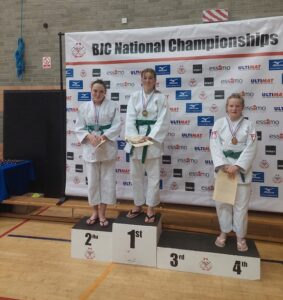
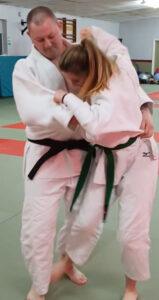
A: My dad was a coach and I started when I was very young, probably when I was around five. Once I got older, I wanted to compete and see how far I could go in competition, and how I could apply my technique to win. I started competitions aged 11. I really enjoy Judo because it teaches you discipline, and you get to meet so many people who have spent years mastering the sport. I also enjoy being able to learn new techniques before putting them into practice in ‘randori’ (freestyle practice).
Q: Can you tell us about some of your biggest successes?
A: I am currently British Champion for the British Judo Council (BJC), and most recently, medalled in third place in the Scottish Closed Championships. I am also in the National Development Squad. I recently completed an FPJ (Fundamental Principles of Judo) course, which will allow me to become a qualified coach when I turn 16.
Q: Who is your sports inspiration and why?
A: Beryl Cook, who is the highest graded female in the BJC and who has been doing Judo for longer than I’ve been alive. I look up to her because her technique and the way she controls her movement around the mat is some of the best I’ve ever seen. She has spent so long developing her technique to be near to perfection, and I admire the effort and time she has put into becoming the judoka she is.
Q: What qualities make someone a good sportsperson?
A: Etiquette. If you have good etiquette and respect your opponents, people will immediately respect you more in the sporting world. Not only this but, to be a good sportsperson, you must be driven to succeed. The effort you need to put into training and the time you have to take to train demands a lot of determination to stay at a competitive level.
Q: How does being an athlete make you a better person?
A: Being an athlete boosts your confidence and helps you to improve your communication skills; you learn to speak to so many different people and to talk about your experiences.
Q: What is the one thing you always do after a good performance?
A: I always make sure to tell all my coaches how I’ve performed, and make sure that I get their feedback and input on how I can improve in time for my next competition. I always strive to make my next performance better than the last; whether that be by gaining more stamina, or improving my technique.
Q: How do you calm your butterflies when you compete?
A: Before I get on the mat, I pat myself down and do a couple of jumps to get my adrenaline up prior to competing.
Q: What is your favourite food to eat the night before a big competition?
A: I like to have porridge in the morning after my weigh-in and usually an apple too. I’m not that specific when it comes to my evening meal though.
Q: What is your favourite place to compete and why?
A: I like to compete at Ravenscraig Regional Sports Facility in Motherwell, Glasgow, as that’s where I went for my first competition. It’s also one of the venues the Commonwealth Games has been held in.
Q: Who inspired you as a young athlete?
A: My dad inspired me to compete and to do well in Judo. He is a black belt and has been doing Judo since he was very young. He coaches me and has helped me develop my Judo a lot.
Q: How do you inspire others to excel in sport?
A: I love to coach my sport and to teach others, and hope they enjoy it as much as I do. Every Wednesday, I coach a class at my local Judo Club for under 9s, where I introduce them to Judo and the basics of the sport.
Q: Who else plays an important role in your sporting success?
A: My parents and family members are always really encouraging and support me at all my competitions. My parents take a lot of time to plan my trips to competitions, and my dad helps me to think of different techniques and tactics for each of my competitions.
Q: How does Lathallan support you in your sporting endeavours?
A: In school, I get to use the gym, and get strength and conditioning training – with others – from the PE teachers, up to three times a week. Not only this, but the school also allows me time off to get to training and competitions.
Q: What do you do to relax?
A: I like to listen to podcasts and talk to people whilst travelling to Judo. It helps calm my nerves and lowers my heart rate after sessions.
Q: Do you remember your very first success?
A: I remember one of the first fights I won, where I was very doubtful that I’d be able to. The pride you gain when you know you’ve put in all your energy into a fight and have managed to get a win out of it is great. It’s always a great confidence boost and helps to get your adrenaline up for the next fight.
Q: What has been your greatest achievement to-date?
A: My British Championship Gold. It was a competition that anyone from around Britain could enter and I won every fight, with no points being scored against me. It took a lot of travelling to make it there but it all ended up being worthwhile in the end as I came home with Gold.
Q: What is your biggest strength, and what is one of the areas you want to improve?
A: A strength of mine is definitely hold-downs in groundwork. I find that I am very good at moving around my partner to keep them pinned and can keep them pinned with many different holds if I need to, without giving them the chance to escape.
One of my weaknesses is my standing fighting, as I was taught in a less competitive / more technical club. I have the technique but struggle to put it into practice and am improving this by starting two new clubs that will allow me to have more ‘randori’ practice.
Q: What is the toughest aspect of being an athlete?
A: Probably when you lose something that people expect you to win. You feel like you’ve let people down and even when you still medal, if it’s not gold, all you can think about is how you could have changed your fights to win against someone.
Q: Do you have any advice to other young people, including your fellow pupils, who may want to start a career in sports?
A: Go out of your way to try to achieve, ask questions about what you can do to improve and whether there’s anything else you can do. Always put in the extra effort towards your sport.
Q: Where do you see yourself in 5-10 years’ time?
A: I would like to be a part of the Scotland team and to have the chance to compete in different countries.
———————————
Dean Fearn (S4), Swimming and Rugby
Q: What motivated you to get into your chosen sport?
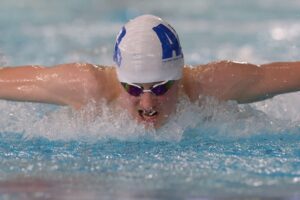
A: I used to do triathlons and aquathlons, and found the swimming part enjoyable as I used to get ahead of everyone during the swimming stage of the race. I decided that I wanted to be faster than my friends, so I joined a club – Stonehaven Swimming Club – at the age of 10 and eventually achieved that ambition, then stayed with it.
I like my sport because I like having to do everything myself, like other individual sports. I like travelling and swimming in unfamiliar pools all around the place. Swimming also helps me to relax and clear my mind after a hard day.
Q: Can you tell us about some of your biggest successes?
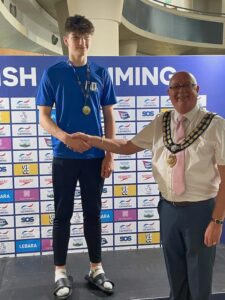
A: In the past 6-12 months, my biggest success was that I took the opportunity to compete at the British Summer Swimming Championships in Sheffield. I came home with four Gold medals and a Silver, along with eight Scottish records and one British record. I performed much better than I had expected and achieved my goal of medaling.
Q: Who is your sports inspiration and why?
A: I liked Michael Phelps as he was the world’s most successful swimmer ever. He was very good at both sprinting and long-distance events such as 200 meters and, from time to time, 400 meters. He was a humble swimmer and very much liked.
Q: What qualities make someone a good sportsperson?
A: Someone that works hard to achieve what they want, has a positive attitude, and gives everything their full effort and best shot. Also supporting teammates in a team game is very important. And never judge someone for trying.
Q: How does being an athlete make you a better person?
A: I feel a lot better and more active. It also has a positive impact on my mindset. I would much rather be active and be an athlete than not be one. It also allows me to cooperate with different people and build relationships.
Q: How do you calm your butterflies when you compete?
A: I like feeling nervous and putting pressure upon myself. It helps me to concentrate and to perform well.
Q:What is your favourite food to eat the night before a big competition?
A: I like to eat something that has lots of meat in it; nothing specific but chicken, fish, steak, etc. Eating healthily before a race or competition has a huge impact on performance.
Q: What is your favourite place to compete and why?
A: So far, I favour the 50-metre pool in Sheffield, England. The pool dips in the middle and feels like a fast pool. The lane width is good, the temperature is great and the lane ropes are big.
Q: Is there anything you’ve had to give up to compete at such a high level?
A: I have to leave school early on Monday, Tuesday and Wednesday in order to attend to my swimming needs. I have to juggle my time between homework and swimming in order to train at a high level. I also compete most weekends and have little time to go out with friends. I will eventually have to drop Rugby altogether to focus on my swimming, as it has a high risk of injury and concussion. But swimming helps me to look forward to something after a hard day at school and makes me want to continuously do better.
Q: Who else plays an important role in your sporting success?
A: My mum drives me everywhere, all over the place, almost every day of the week. She also organises and signs me up for all my competitions.
Q: How does Lathallan support you in your sporting endeavours?
A: Lathallan is very flexible which helps me to attend half of my swimming practices every week. There is also an ‘S & C’ group at school, which allows me to work on swimming-specific strength and conditioning.
Q: What do you do to relax?
A: To relax, I take long showers and sometimes baths. I like just switching off. When I don’t have homework or swimming, or need to go to the gym, I lie in bed and relax on my phone. That does not happen often.
Q: Do you remember your very first success?
A: My very first success was when I was 11 and I made it to the finals of a Scottish Schools event in Glasgow, winning Gold. I was the youngest in my category. However, my best achievement so far was in Sheffield in the summer, in the 50 meters ‘Fly’ race where I won Gold in my age group, got the British record by 0.27 of a second and beat everyone, including U18s. I picked this moment because it was the best feeling to swim and I am very proud of it.
Q: What is your biggest strength, and what is one of the areas you want to improve?
A: A strength of mine is my reaction time off the block and my underwater work as that’s where I get ahead in the race. Finally, my kick is very dominant compared to my arm pulls.
My weakness is breaststroke, which party links to a knee problem, Osgood-Schlatter. I can work around this, but only for short distances.
Q: Do you have any advice to other young people, including your fellow pupils, who may want to start a career in sports?
A: Just keep trying to have fun, work very hard but, most importantly, enjoy what you’re doing.
Q: Where do you see yourself in 5-10 years’ time?
A: I want to be at a world-class level, competing in World Championships, the Olympics and more.
———————————
Do you want your child to attend a school where their interests and talents are nurtured? Get in touch with our Admissions Officer, Nicola Harrison, to learn more about our S1 and S5 scholarships, or to arrange a tour.